
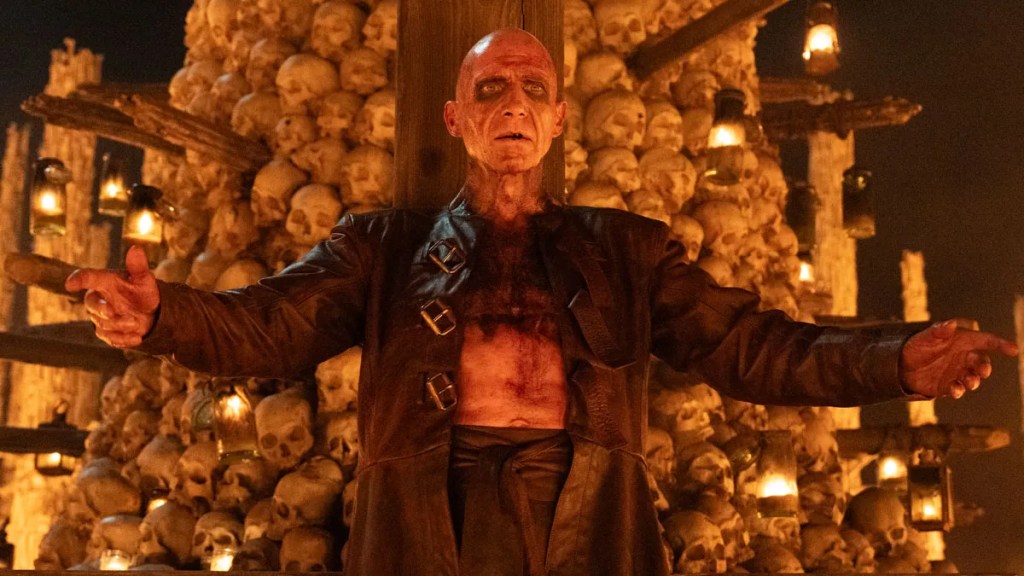
The first 28 Years Later (odd to say first, given it’s the third 28 Days Later film) was a transformative cinematic experience under the maximalist eye of Danny Boyle. Misunderstood upon release by many, its unique storytelling structure peeled away from the brutality and fear and blossomed into the appreciation of life, catching many fans, hoping for more a more throat-ripping finish, off-guard. All of that is due to the writing of Alex Garland, who has in the last decade carved out his own auteur name for himself in the film-space with cerebral fare like Annihilation and Ex Machina and thematically-uglier thrillers like Civil War and Men. Garland must have known coming back to this franchise two decades later meant not (as the kids say) “reheating his own nachos”. Instead his approach to diving back into the world of the infected is to reinvent it all together with a more modern subtext.
This new (hopefully) trilogy takes a lot from the UK experience of Brexit and adds a dash of a post-COVID era world, and rather than have characters burdened with sudden disconnection, instead depict them struggling with reconnection, both to society and to their own humanity. Here, Garland doubles down and focuses in on a group of wanderers that couldn’t be more disconnected from reality, disconnected from humanity, taking the story into a weirder and more delirious direction, and somehow coming out the other side with a momentous feeling of hope.
Picking up where the last film left off, young Spike (Alfie Williams) is picked up by a group of Jimmy Saville-looking cult members, led by the terrifying Jimmy Crystal (Jack O’Connell, having a hoot reveling in villainy) and forced to take part in their violent rituals of terror. Meanwhile, across the island, Dr. Ian Kelson (Ralph Fiennes) has formed a unique bond with the Alpha zombie he’s named Samson (Chi Lewis-Parry) and makes it his mission to cure the hulking killer of his Rage virus. When both stories inevitably collide, Kelson must (ahem) put on a show in the hopes of preserving his duties and preventing more chaos.
So many moments in this sequel border on questionable, unimaginable working on paper, and yet tilt in the direction of brilliant through sheer commitment. No, it’s not like any 28 Days, Weeks, or Years film before it. It’s a film unafraid to be its own strange and quirky beast, a film that is allowing you to laugh out of pure absurdity despite how harrowing and unflinching the film gets. A film that flips back and forth tonally from morphine-laced serenity to unpleasant, skin-peeling despair before crescendoing into a full-blown flame-throwing rock concert.
Unfortunately, Danny Boyle was unable to make this film due to the overlap in both Years films happening at the same time. Back-to-back filming was a bizarre choice for just two films of a trilogy, but we are thankful for it just for this film’s earlier-than-expected arrival. Fortunately, in the director’s chair instead is Nia DaCosta, whose skillfully-crafted Candyman reboot from 2021 provided enough confidence she could deliver on the thrills and chills. DaCosta’s direction is much less experimental and visually-distinct (though it’s hard for anyone to match Boyle and cinematographer Anthony Dod Mantle’s paired vision and scope), but she and cinematographer Sean Bobbitt have a few new tricks up their sleeves, embracing the weirdness of their abnormal characters and narrowing in on their tainted and evolving psyche, allowing Garland’s exploration of religious and moral faith to be front and center. In this seemingly hopeless and isolated world, all it takes is one good person to make a difference, to reverse-“infect” the rest with decency like a ripple effect, and that person is Ralph Fiennes’ Dr. Ian Kelson.
Fiennes made a huge impact in 28 Years Later, the inarguable bright spot and secret weapon that elevated the third act of that film with his introduction alone. He is promoted to borderline-lead this time out, practically taking this chapter from everyone else, and not only continues to be a beacon of hope, but even gets to be wildly theatrical. A man with nothing left but himself and his pure mind, Fiennes is completely fearless, baring every ounce of his soul and body to the camera, whether through the kind twinkle of his eyes or literally bursting out into dance. It’s mesmerizing work that will both perplex audiences and keep them fully engaged, holding the wonky energy of the whole film in his iodine-coded palms. For a series about finding the beauty of life through darkness, Fiennes is the beauty of life personified.
Where The Bone Temple may stumble are just in the areas that can’t carry over from 28 Years Later, for instance the breathtaking score from Young Fathers. However, DaCosta infuses the soundtrack with inspired choices (one in particular that everyone will be raving about) and Hildur Guðnadóttir in the composer’s seat continues to unnerve with her discomforting strings. And then of course, there’s the ending, which if the internet hasn’t already spoiled for you, finally promises the film that many have been hoping for with a needle drop that will leave fans cheering. It’s the perfect transition into the final chapter we absolutely must get to complete this beautifully distinctive and unexpectedly thought-provoking trilogy.



 jakobtalksfilm.com
Leave a comment