
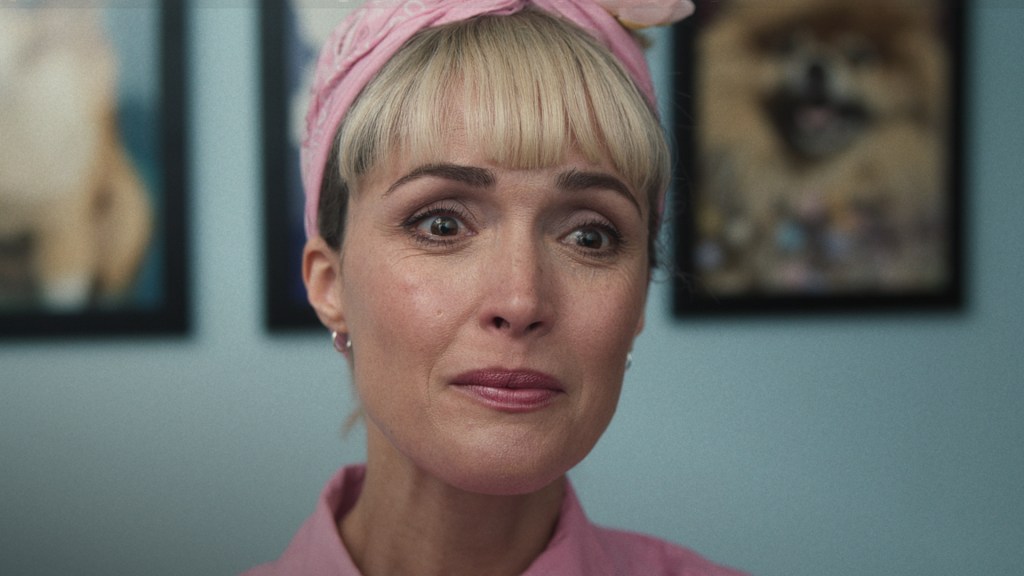
“It’s going to take time.” Amanda Ogle is told this by every person in her life trying to help her. When her car, the only home she has, is stolen, recovered but impounded, and unable to be returned to her unless she pays the over-$270 fee, she needs a solution immediately. She demands help right that second. She tries to get a lawyer and a court proceeding going instantly. But that’s not how this country’s justice system, legal system, or economical system works. Stephanie Laing’s new film Tow, based on the true story of Ogle, is a tough indictment on how our country does so little to help or aid people in need under its capitalist umbrella and how the only true help there is to get in this world is just one person willing to step in.
Seamlessly wearing a pair of fake cigarette-stained teeth and (less-seamlessly) rocking a messy blonde hairdo, Rose Byrne trades one world-weary struggling woman after her last year’s (finally) Oscar-nominated turn in If I Had Legs, I’d Kick You for another world-weary struggling woman. Amanda Ogle, a woman still battling her past trauma and substance abuse issues, has one certain roof over her head: her 1991 Toyota Camry. Finally securing a job at a pet spa, she exits her successful interview to discover her car is missing (her one requirement for work). After tracking it down to the correct towing lot, she is unable to afford the couple hundred it is to return it. Eventually, and ridiculously, the fee balloons to over $21,000. She knows it is her legal right to have her car back without payment and fights for an appeal with the help of a young lawyer, who had thankfully overheard her plea at the courthouse. Byrne is expectedly good at making Amanda understandably helpless and incapable of being taken seriously by everyone around her, while also a passionate woman worth rooting for. Ogle knows she’s had to own up to her own mistakes, but as a woman being scammed by a greedy, money-sucking system, she fights for her own dignity.
Tow features the kind of ensemble cast that is so well-assembled with likable faces, it peaks immediate curiosity with that alone. Amanda Ogle’s world is populated with many unique personalities, most setting specific boundaries with her and working to the best of the confides of their positions to help her. Nobody is against her whatsoever. They may not like her, but they sympathize enough. But with the recognizable names taking part in this project, some fit right in (Octavia Spencer as the tough-love shelter manager Barb and Dominic Sessa as Amanda’s noble, scrappy young lawyer Kevin), some stick out like a sore thumb (Ariana DeBose playing to the back row and Demi Lovato, so unable to shed her image, made even more hard to look past when she even gets to sing), and some are nice to have around but do so little (Simon Rex as the towing company employee and Elsie Fisher as her estranged, aspiring-designer daughter).
It serves Amanda’s journey well to highlight the various individuals that kept her afloat in her legal battle, but by the end, it feels like a stronger, tighter emphasis on her relationship with Kevin as the film’s central plot would have left a more memorable impression. Sessa was such a discovery when he burst onto the scene in 2023’s The Holdovers, a face ripped out of the 1970s, and he works excellently as an earnest, occasionally sloppy partner to Byrne’s Amanda, you wish the film would just be a two-hander. The film’s end credits literally play footage of the real Amanda, her daughter, and the real Kevin gathered together and it doesn’t land as emotionally as it should because their relationship in the film lacks the substance and development of, for example, Julia Roberts and Albert Finney’s in Erin Brockovich. Not to say this film should just be a carbon copy of that story, but the similarities are already there, it becomes too easy to compare what that film does so right and where this film can’t quite excel.
Laing is a strong at keeping the tone upbeat and sunny, even during Ogle’s lowest points, though the passage of time is quite shapeless. Amanda’s battle lasts a whole year, but the structure of the film makes it feel like a few weeks, lacking preciseness in depicting how much of a chunk of her life this was for her. But Byrne is so watchable, carrying every moment of the film on her back, and that is enough to keep it a totally recommendable viewing. It may not fix the issues of the 1% profiting off of the vulnerable 99%, but it proves that while the war may never be won in this country, winning just one small battle is still a huge leap forward.



 jakobtalksfilm.com
Leave a comment