
Film fans are currently in the midst of a busy week of Netflix Original awards contenders, with a truckload more on the way. With so many pumping out at a time that demand coverage, it may be easiest to crunch a few together in discussion for some leaner reviews. Public and critical opinions of Netflix’s current slate of contenders have been all over the map since their festival debuts with certain movies getting hot or cold responses depending on the day of the week or where it screened or maybe based on what soup was the special at the diner across the street. So let’s discuss the end of October’s batch of (streaming) cinema.
“A House of Dynamite”
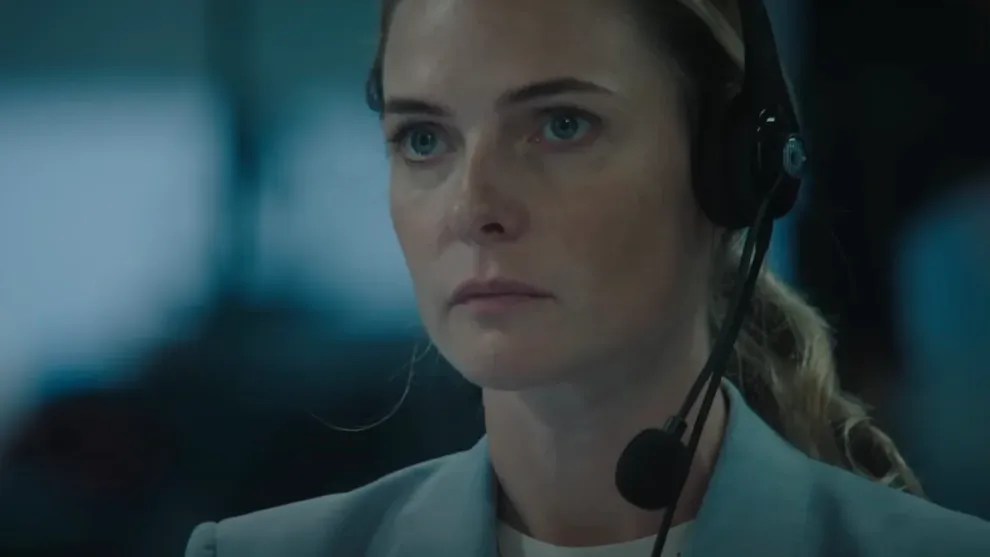
Kathryn Bigelow’s long overdue return to film after the polarizing Detroit (2017) delivers an absolute nail-biter of a scenario portraying three perspectives of the same event of a global disaster. Written by Noah Oppenheim, A House of Dynamite depicts, at its most probable, the way the United States government would respond to an anonymous missile headed straight toward the country in the brief 19-minute window they’re given. These perspectives are in order: the White House Situation Room led by Captain Olivia Walker (Rebecca Ferguson), the United States Strategic Command (STRATCOM) out in Nebraska led by commander General Anthony Brady (Tracy Letts), and finally the President of the United States himself (Idris Elba) that must be the one to make a fateful decision of retaliation with little to no information in minutes-time.
It seems to be common opinion that the first third is the best section, causing the rewind-the-clock repeat to be a bit deflating as it goes on. It’s certainly the most hair-raising and harrowing the film gets. Some may also find its showcasing of dread for dread-sake to feel impotent. While it may be a more polished example than what our current administration would likely be able to accomplish, at its core, Bigelow’s intent seems to be to focus on portraying the weight and toll of inescapable failure. How anything could be ripped away from us in the blink of an eye and the honest human response, no matter what position of power you’re in, that comes with it. The best dramatic beats showcasing the haunted faces of those literally counting down the seconds in their heads whose only thoughts are their loved ones and getting the chance to speak to them possibly one last time. Jared Harris’ mortifying scene as Secretary of Defense Reid Baker contacting his estranged daughter (Kaitlyn Dever) is a gut-punch.
Bigelow’s sobering, brutal touch elevates every scene, even though its effectiveness does diminish as it goes on, also missing a resonant final scene to drive home the point. Instead, her mic-drop is just the concept of these three perspectives and no answers as to the results of the actions taken. Perhaps its unforgiving lack of answers is the more appropriate representation, because in these situations, no matter where you are in the world, you don’t have a say in your fate, only the few people in positions of power might. Our lives are in their hands daily. The novelty of this experiment may be fleeting and futile, but as a film, it does impressively race the heartbeat.
A House of Dynamite is now available to stream on Netflix.
“Ballad of a Small Player”
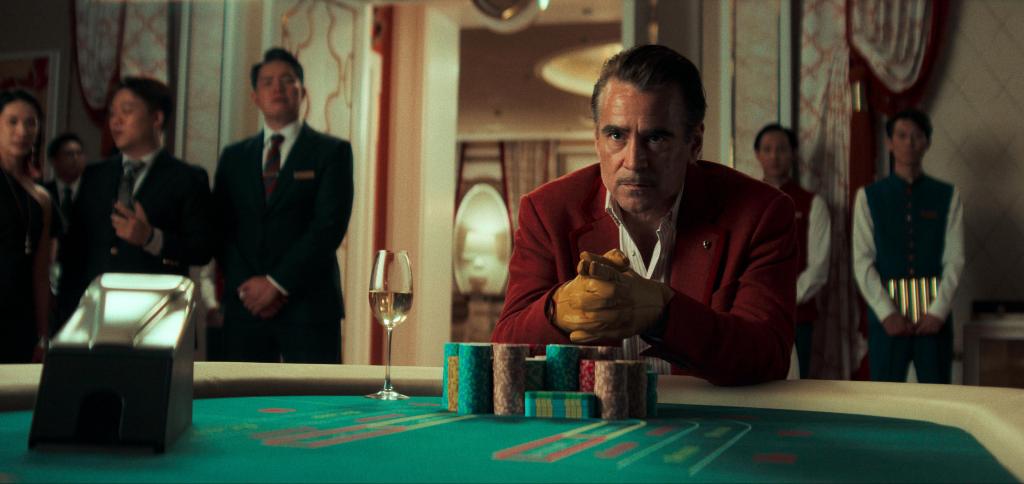
Edward Berger’s follow-up to his last two dynamite hits All Quiet on the Western Front (2022) and Conclave (2024) acts as a film with a full tank of gas but feels more like its running on fumes. Ballad of a Small Player stars Colin Farrell as an obsessive gambler “Lord Doyle” hiding out in Macau, both trying to build enough bank to pay off his debts while also creating new debts in the process. There he meets a beautiful casino employee Dao Ming, who comes to his aid in the most surprising of times, as well as a private investigator Cynthia Brithe, who gives him a time limit to deliver the hefty sum he’s long owed.
There is a Michael Mann-ness to the plot that feels somewhat cozy, a lavish and self-serious tale of a man with a specific obsession, throw in life or death stakes, and a gorgeous woman at the center. It’s also shot equistively by James Friend who finds colors in certain shots that probably don’t even exist in the real world. He makes the setting pop like the Lewis Carroll version of Macau, a fitting filter given Doyle is living in his own fantasy world, an excuse to be careless. Volker Bertelmann’s score is operatic and overstated. But all the pomp and circumstance can’t disguise an empty story.
There isn’t anything to “Lord Doyle”, nor to the characters around him. We are simply left to watch Colin Farrell sweat and stutter through his situation, just waiting for the inevitable shoe to drop. Not that this type of story can’t work multiple times, but this just feels like a lesser, recycled version of better gambling films. Even when it wants to incorporate startling hallucinogenic imagery, it’s used far too brief and looks sadly cheap. Not even Tilda Swinton pops (stuck in a dull role) and she wears a big red wig! An exercise in pure style is all this works as, but much of its ideas feel thrown at the wall. Even an odd mid-credits dance is included here for reasons impossible to comprehend. Let’s just hope this was something Berger just needed to get out of his system.
Ballad of a Small Player is currently in select cinemas and will stream on Netflix on October 29, 2025.

“Frankenstein”
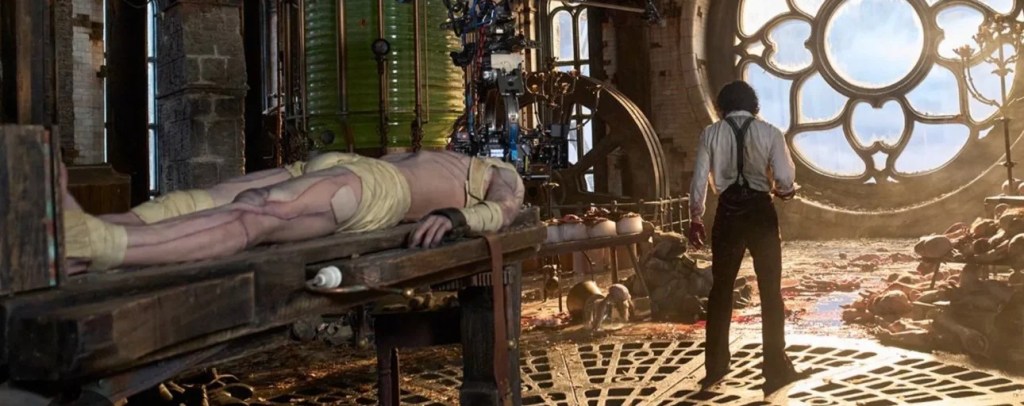
Guillermo del Toro’s entire career has been due to his love of the story of Frankenstein, many of his films including a misunderstood creature seeking acceptence. He has spoken much of his childhood watching James Whale’s Frankenstein (1931), empathizing with the creature as it is scorned and helplessly defeated by the film’s end. Yes, Frankenstein’s monster is occasionally violent, but never once are we not on his side in del Toro’s version. His vision of pure empathy with the hulking walking-cadaver is the overwhelming strength to this adaptation, as well as what shows off a few of its biggest weaknesses.
Victor Frankenstein (Oscar Isaac), haunted by the death of his mother and bruised from the coldness of his late father (Charles Dance) is obsessed with reviving life to the deceased. With the help of an arms merchant Henrich Hardlander (Christoph Waltz) providing the necessary funds, Victor builds his lab and successfully brings to life a living being (Jacob Elordi). But once the mistreated creature has escaped, Victor is on the run from the very thing he created. No, this is not a horror film, though horrific things do happen. This is first and foremost a love story, the relationship between a man and a woman, between a man and his “son”, and that “son” and the woman. It’s also about the vicious cycle of generational sins passed from the father to the son.
What saves it in the admittedly unsubtle and expository script is the reversal of man and monster and the meaning of being human through the eyes of the creature. What sinks it a bit is the romance, with Mia Goth as Harlandar’s niece Lady Elizabeth, an archetype of a character but also poorly matched with Goth’s casting. Unable to have chemistry with Isaac or Elordi, Goth’s performance comes off a bit stiff (though she is impressive in a secondary role as Victor’s mother in flashback, aided by incredible makeup prosthetic). Over an hour is dedicated to Victor’s story and his obsession with both Lady Elizabeth and his creation, which is assisted by Isaac’s great energy and likability and some stunning production and costume design. But once Elordi takes over the film, it’s where del Toro’s heart is in it the most.
Much of the film’s teachings can feel overwrought and saccharine but Elordi shockingly makes it work (he apparently used his own dog as inspiration for his nearly-wordless performance here). It’s a very different interpretation (and a far more handsome one) than what has ever come before, but it also feels truest to the original text. While it’s a bit clobbering thematically, enough of it works as a genuine spectacle. A sumptuous and earnest artistic triumph that is far from perfect, but much like the creature itself, is assembled with so much passion, it’s hard to not appreciate.
Frankenstein is currently in select cinemas and will stream on Netflix on November 7, 2025.






 jakobtalksfilm.com
Leave a comment