After an incredibly busy summer starting a new podcast (hey, you like animation and the Oscars? Give “Best Animated Podcast” a listen: available on all podcast platforms!) and other life events delaying the pile of reviews I’ve been putting off, I’m taking this Day of Labor to catch up on quick thoughts on a handful of independent and studio titles I never gave myself the chance to review. I shall go on a small hiatus with podcasting in the next two months, just before awards season really goes into overdrive, where I will be able to pump more opinions into this little outlet. If it looks weird that I never reviewed The Odyssey or Spider-Man but reviewed Camp Miasma and Ted Lasso, it doesn’t mean I didn’t see those films. It’s all about immediate priorities in the moment, people, which includes this review catch-up. Another “studio film/blockbuster” review catch-up will follow sometime soon, but given I was given many of these as critics screeners, this was a far more urgent matter. So here are a handful of films I saw over the summer that do or do not demand your attention:
BUDDY
(dir. Casper Kelly)
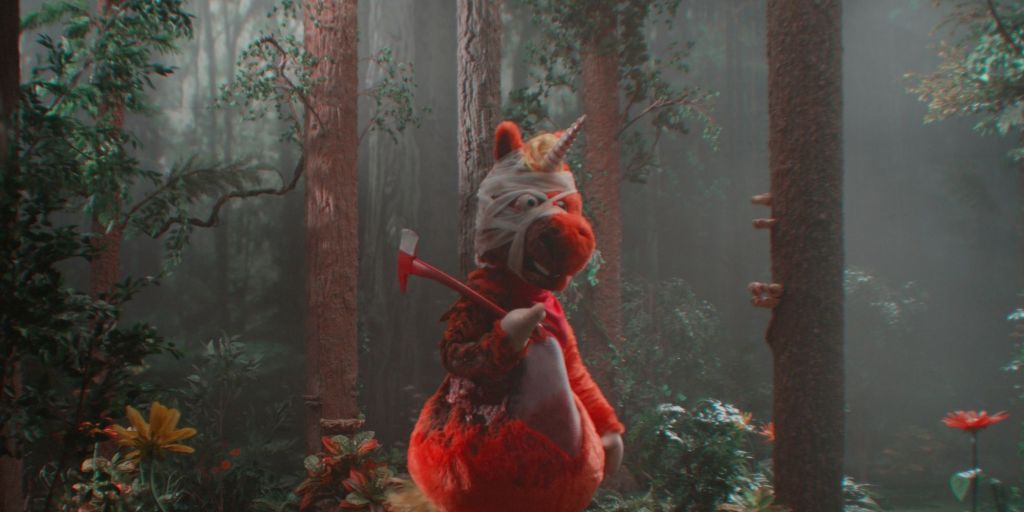
I haven’t followed Kelly’s filmmaking career outside of the masterful Too Many Cooks (although I do remember watching his Scooby-Doo/Blair Witch parody), but his aesthetic commitment to perverting childhood innocence continues to impress. Buddy, a film about a Barney-like Unicorn who turns against his children friends in ways violent and bloody, is the perfect little playset for Kelly to destroy his toys in. Keegan-Michael Key’s vocal work is impressively dark and challenging, while still inflecting that same PBS enthusiasm into what is meant to be an comforting and educational being.
Where Buddy falters is its structure and resolution. While most of the film takes place in this fabricated television reality, we split away to reality after a horrifying third act into the need to introduce Cristin Milioti’s mother character, who will inevitably be sucked into this nightmare as the children victims. This break is where the intensity of Buddy starts to die off, and when it returns to its batsh*ttery, some of the steam has already been let out, leading to a finale that comes off more goofy than it should. Still, much of it remains intriguingly well-crafted and entertaining. If you find great amusement in watching children get sucked down the gullet of a furry-costumed unicorn, you should get your money’s worth.
GAIL DAUGHTRY AND
THE CELEBRITY SEX PASS
(dir. David Wain)
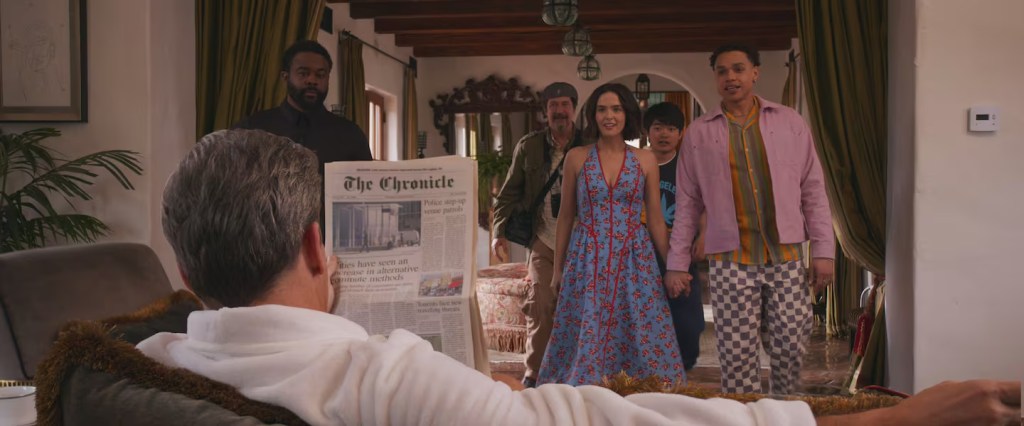
If movies that include John Slattery getting kicked so hard in the balls that he can’t stop farting makes you laugh, than this movie is for you. David Wain’s sense of humor has always ranged from ridiculously stupid to stupidly ridiculous, though never crass or repulsive, and always with total sincerity. Sometimes it feels airless and other times, it will send you to the clouds. Gail Daughtry is a unsurprisingly silly, but surprisingly tight and well-constructed remake of The Wizard of Oz about a woman on a mission to reclaim her dignity.
What works with Daughtry, if you just relax into its deeply unserious plot (perhaps pop an edible?), is the extremely well-utilized ensemble cast. Zoey Deutch is a ball of light, believably simple with effervescent, positive energy. Ken Marino is lovably and endearingly daft. Ben Wang is cute and charming. Slattery is a gonzo hoot. Then, of course, there’s the inclusion of Jon Hamm, whose comedic bones often outshine the dramatic ones he made his name off of. A monumentally silly comedy that means absolutely no harm. One that hopes you enjoy it, and if not, oh well!
OUR HERO, BALTHAZAR
(dir. Oscar Boyson)
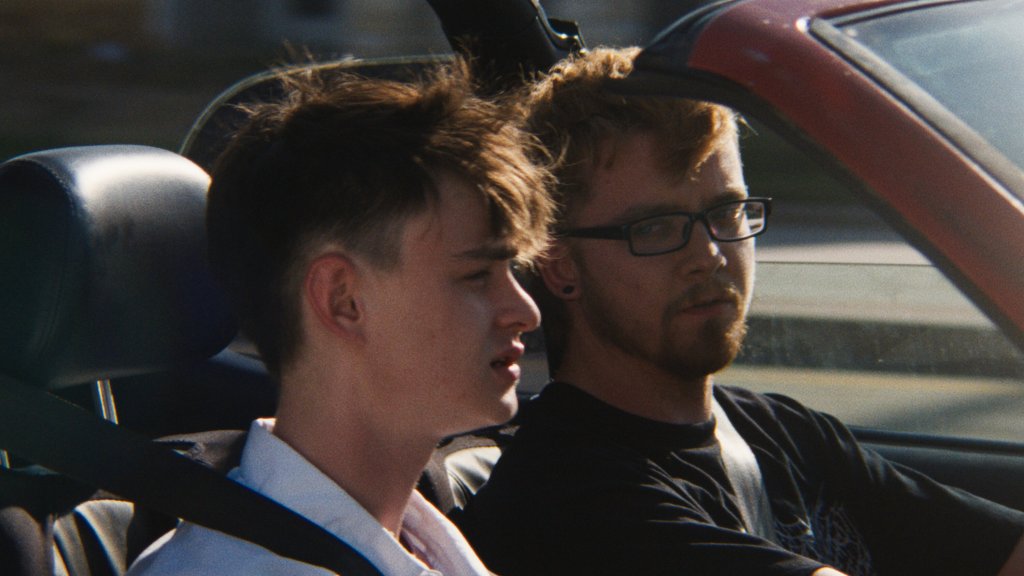
Teens are scary. So many confused souls who have such little experience of the real world and there place in it, their brains still maturing and forming, but their hands still capable of committing horrible atrocities. Even worse, how easily manipulated they can be. Much like this year’s The Drama, Balthazar deals with not of committing violent acts, but considering them and how scary it is that they could happen with just one thoughtless decision. Even more sinister, Balthazar is a film about teen self-absorption and a need for constant attention.
Carried by a fearless Jaeden Martell, having to fake enormous emotional meltdowns with a phone screen to his crying eyes, the film’s true secret weapon is Asa Butterfield. Butterfield, who made a career off of his adorably-infantile face and cinematic innocence (and later a shockingly promiscuous lead role in the series Sex Education), is unrecognizable here in one of the best performances by any actor this year. He creates such a specific and complex window into the young American incel archetype, complete with with a totally niche cartoon obsession, that feels frighteningly familiar and devastatingly accurate. While the finale comes a bit too fast and clean, not really allowing the plot to build anxiously or letting all of the nuance be explored in this unsettling situation, so much of Balthazar is fascinating to behold, both despicable and hopeless.
MADDIE’S SECRET
(dir. John Early)
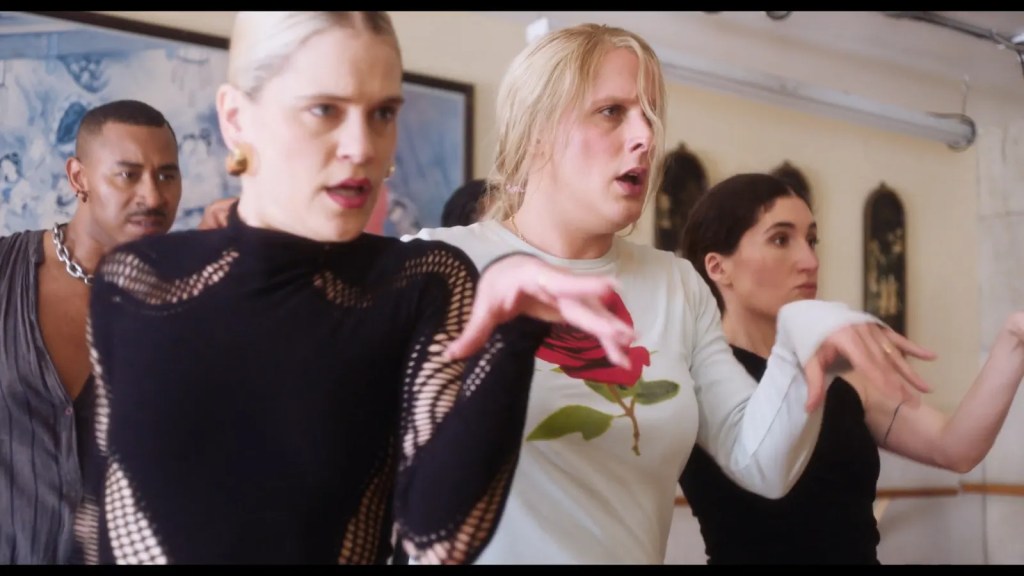
John Early’s first directorial feature, a stunning recreation of melodrama-exploitation television movies is equal parts John Waters as it is late-1990s Lifetime. The total “commit to the bit” approach allows for a handful of intentional laughs, but most of this left me in awe of its convictions. The inclusion of comic actors in overly-serious parts, including Early as our lead heroine (not a trans or “drag” performance, this is Early just fully embodying Maddie) and his real-life comic counterpart Kate Berlant as his fearless lesbian co-worker.
Early understands that while these films were exploitative and intentionally overt with drama, there was also a hint of truth to them. An exaggerated truth, but nuggets of reality that resonate with most human beings who were glued to their televisions to consume these stories. They also brought awareness to serious issues such as body-image, suicide, abuse, pregancy, women’s rights, drug addictions, and mental health by making these issues as loud and clear as they could possibly be. Early’s integrity in recreating this genre to a flawless degree is as commendable as it is surprisingly compelling. You won’t know whether or not to laugh or cry and it won’t matter.
THE MAGIC FARAWAY TREE
(dir. Ben Gregor)
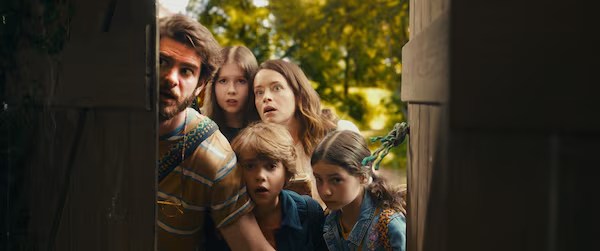
While it may have played as a slightly bigger release in the UK, the US release of The Magic Faraway Tree (written by Simon Farnaby of the Paddington films) briskly dropped in theatres without an ounce of promotion. While the majority of reviews were kind to it, and it does play better at home on a Sunday morning, there also felt like a bit of a missed opportunity here given Farnaby’s track record and the star power of Andrew Garfield, Claire Foy, and Rebecca Ferguson. They, in fact, are the only reason the film has any staying power whatsoever. For a story about technology-dependent youth learning to use their imagination thanks to the discovery of a hidden confetti world of wonder, the children’s adventure half of the story drags on with character actors and rising stars such as Nicola Caughlan playing pre-school dress up in cheaply designed sets and overly-enthusiastic line-readings.
Meanwhile, a really heartwarming story about two down-on-their-luck parents trying to make a better life for their kids by growing a tomato farm is stuck in the middle of this. Garfield in particular is magnetic and earnest, giving every bit of his natural charismatic talent to a slightly-airless family film. The film also finds no new or interesting ways of dealing with the well-worn message of kids’ addictions to their screens and just leans on the obvious. It is entirely well-meaning, and as I stated, has elements that swell the heart, but it’s all trapped in a clunky plot that feels more imaginary than fantasy.
ROSE OF NEVADA
(dir. Mark Jenkin)
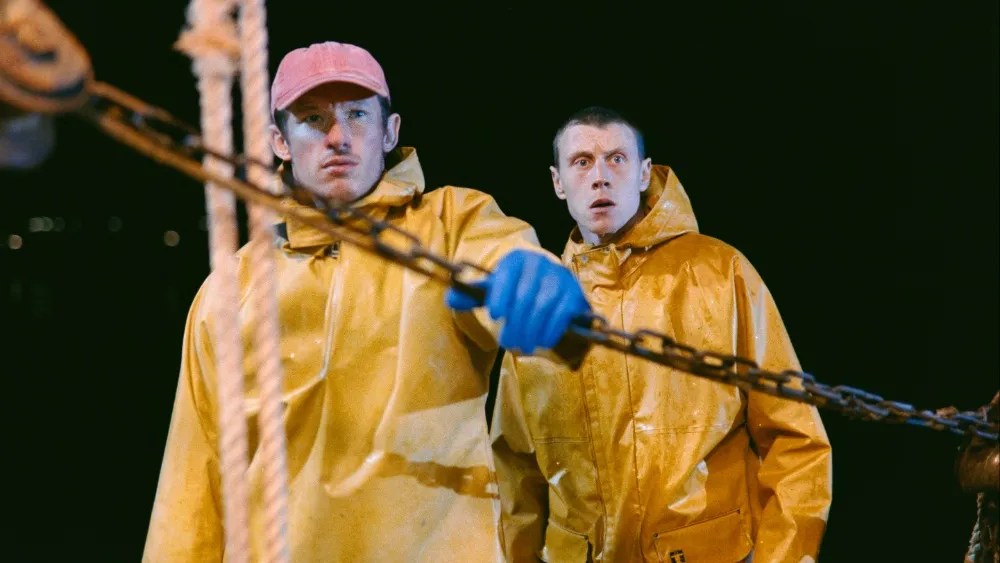
Mark Jenkins is one of those filmmakers that bests anybody in the business attempting “period accuracy”. Beyond the fact that Rose of Nevada is a time-travel movie, and recreates the early 1990 to a perfect degree, Jenkins is also making these films in a world riddled with AI, unmistakably and literally hand-crafted. From shooting on a 16mm Bolex film camera to recording the dialogue and sound separate, Jenkin has concocted the type of film that hasn’t looked or felt this way since the 1970s. That visual and audial combination captures something more eerie and unnerving than digital photography and sound could ever achieve. A sense of ghostly, lost media being unearthed.
But this isn’t new for Jenkin, who employed this same procedure onto his other work including Enys Men. It just needs to be emphasized how much it adds to the sense of horror these main characters Nick and Liam (played by the handsome and alluring stars George MacKay and Callum Turner) experience as both are torn with their new unexplainable circumstance. Yes, it’s a lot to process in the moment, and Jenkin doesn’t overexplain anything, so while the aesthetic is haunting, the film treats its audience with cold gloves, tossing you into its freezing ocean. But I haven’t stopped thinking about the film, and the dread it makes you feel by the end.
Thank you so much for reading! Stay tuned for my catch-up on bigger releases from this year including The Odyssey, Spider-Man, Obsession, Backrooms, and more coming soon.




Leave a Reply