

What even is an awards season hopeful these days? As Academy tastes continue to evolve and broaden, more and more space is made for unconventional visions, radical new takes on storytelling, and genre fare that unexpectedly captures the world by storm. As a hopeful, all these films can hope is that, box office or not, they can receive even a crum of acknowledgement. Last year, Weapons walked away with an acting win, a film I loved yet hadn’t even considered being apart of the awards conversation. But ear the sky, the buzz on certain films has risen and declined depending on which, and here are a few thoughts on a handful.

Digger
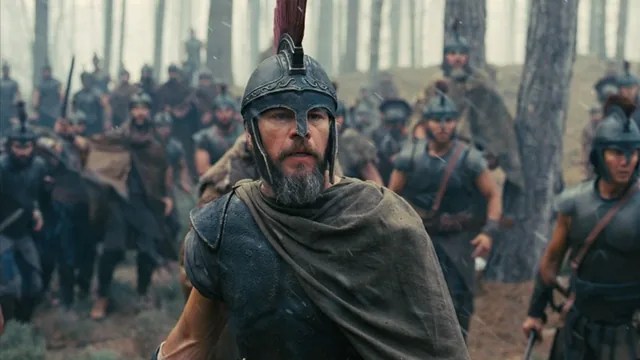
Alejandro G. Inarritu is an unmistakably loud filmmaker, often accused of cinematic “misery porn” as well as masking artificially grim storytelling under the weight of pretty virtuoso filmmaking. From the enormous wintry scope of The Revenant to the mystery box non-linear structure of 21 Grams, Inarritu has built up a level of industry respect that some may sneer their nose up at, while others remain in awe. Tom Cruise is an unmistakably loud actor, building a career of his chiseled face, manic energy, and ability to perform death-defying stunts without a double. Cruise is also a divisive figure due to his work ethic, budget-ballooning, his religion, and his mysteriously quiet personal life. Bringing these two large minds together for an obnoxious and repulsive satire on climate change, the expectations of the type of film you’re likely to get may be one thing, and you will assume right for the first half hour or so. Then, the rug is pulled from the audience.
Digger is one of the most complicated films of year. One boasting with brilliance, doing something that movies would never dare to do and the film that is actually is exceeds with flying colors. The issue with Digger is despite the reveal happening so soon into the film, the film restrains itself from investigating more of its true self until the very end. At that point, you are then faced to endure the “bad” film that it is for most of its running time, with the “good” film dangling in the corner like a cat toy on a string. Perhaps a second viewing of Digger will flow with rewarding detail, with more to “dig” into. But your mileage with the abrasive facade it pretends to be will vary. For me, I yearned for the entire film to calm down and get to the point. And the point is so good and resonates so deeply.
As someone who has rooted for Cruise to return to prestige projects, this is the most unexpected version of that, and I do commend him for going all the way. That said, in this wide ensemble that includes a vein-busting John Goodman, an over-the-top Sandra Huller, and mysterious Jesse Plemons, Riz Ahmed appears to be the only actor able to make the difficulty of committing to its absurdity look easy, an enchantingly short-fused and brilliantly spot-on comic presence. Digger leaves you with both a dreadful sense of mourning for the world, where we currently are and are heading, and a weird but hopeful sense of “but we can get through it”, which should leave me full of emotions out the theatre door. Instead, I left wrestling with the better movie it could have been. But with a film like Digger, and there are few, I could be dead wrong.

Primetime
Lance Oppenheim is a filmmaker I’ve had to catch-up with just recently. Breaking out as a brilliant new voice in documentary filmmaking during the pandemic with films such as Some Kind of Heaven, Sperm World, and more recently HBO’s Ren Faire, his hyper-stylized, soft focus, hard-lit camera choices add a fever dream quality that reels you in, inviting you into its oddity like a lucid dream. Here, with Primetime, he opens up the secret back door that leads to the grotesquely-exploitative reality craze of the mid-2000s and unleashes a fully off-the-leash performance by Robert Pattinson as To Catch A Predator host Chris Hansen.
Certainly the more extreme and fabricated version of the story compared to last year’s documentary Predators, which told more honestly and broad in its questioning the damning affect of Hansen’s program. But that’s not exactly what this film is trying to do anyway. Instead, Primetime is exactly the extremist junk food that got eyeballs hooked on Predator to begin with, albeit with stunning visual and editing choices, hauntingly lurid direction, and phenomenal casting choices (a few that should not be spoiled). Pattinson, while more of a Looney Tune here than Hansen’s real-life unbroken cadence appears to be, is a magnetic movie star, full of darkness and obsession. Skyler Gisondo is wonderfully sympathetic as on-screen bait Decoy Dan Plum. Merritt Wever is exceptional as the gum-chewing, pill-popping producer split between integrity and audience viewership. Even Phoebe Bridgers, as female decoy Del Harvey, in her acting debut, is wildly impressive.
While Primetime can be accused of not being nuanced enough, or pointing a proper finger at Hansen’s methods, the film can be interpreted entirely based on your views of Hansen in general. Was he a hero keeping dangerous predators off of the streets or was he a selfish showboat who exploited people and ruined lives? When was the line crossed and did he cross it himself? Perhaps all is true, yet what Primetime does brilliantly is leave you feeling as though regardless of any noble intentions, it’s a situation impossible to make you feel good at the end because real humanity is still feeling sad for those who do wrong, whether the evil or the plain stupid. It’s also just a riveting thriller that sweeps you up into the chases and pursuits and leaves you glued to the seat like old-fashioned late night programming used to.
Wicker
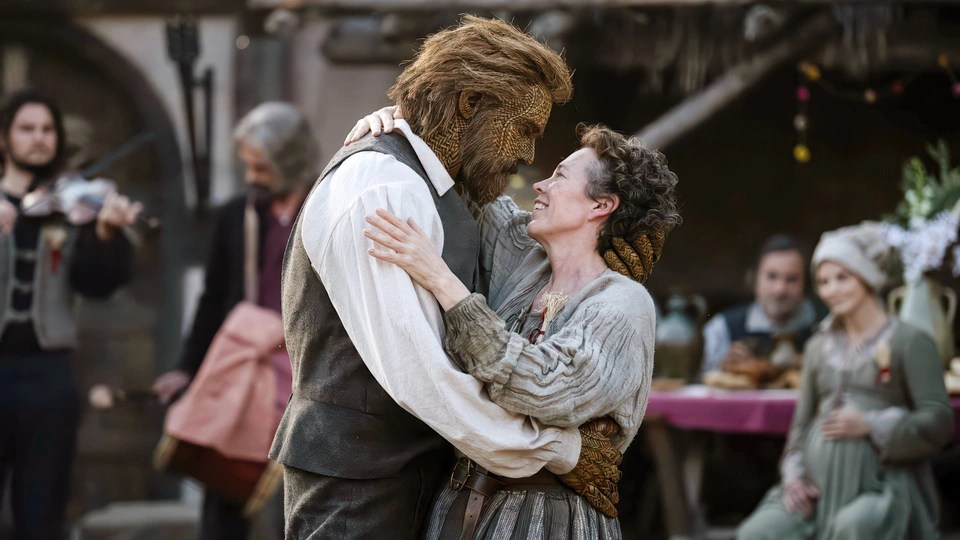
With a premise not required to take seriously, the newest surreal comedy romance by Alex Huston Fischer and Eleanor Wilson may on the surface feel like a one-joke film. Casting the ultimate hunk Alexander Skarsgard (in a very Alexander Skarsgard role) as the Wicker Husband to Olivia Colman’s (in a very Olivia Colman role) Fisherwoman could just be an excuse for hilarious cinematic sexual sequences for 100 minutes. But most of the film’s unfiltered naughtiness is designated to the first half hour, leaving the rest to explore a town in disarray, confused and disoriented by the freedom Colman’s character is given and the envy that brews in them because of it.
As the smelly, frumpy, unloved Fisherwoman, Colman is expectedly a hoot as a woman in desperate need of love and tenderness. Jealous of the women in her medieval seaside village getting married and starting families while she withers away alone in her hut, she finally drops a sack of coins off at a local basket-weaving magician (Peter Dinklage) instructing him to make her a husband. The sweetly stoic and tender Wicker Husband proves to be a tremendous lover and after stunning both the local women and their greedy husbands, including Elizabeth Debicki as a Tailor’s Wife, he becomes the object of affection that alters the entire conservative, man-dominated belief system they’ve committed to their entire existence.
What is lacking in Wicker is the push to go a bit further with its naughtiness. Skarsgard is obviously a spectacular surrogate for Most Desirable Male, but the film restrains itself from going full-kink, which zaps a bit of the fun from the proceedings. But where its strengths lie is how sweet and truthful the romance is handled and how well Colman sells her fragile attachment to her new wooden partner. Skarsgard is also deeply moving, able to emote pure love through his basket-coated face. Working with astounding prosthetic makeup and seamless visual effects, Wicker is also a marvel to look at, allowing us to instantly believe in this creature’s existence as well as his beating heart. The film provides just enough silly gags, bawdy humor, and amusing town panic to go down easy, even if it could have pushed the envelope a bit further.
Wildwood
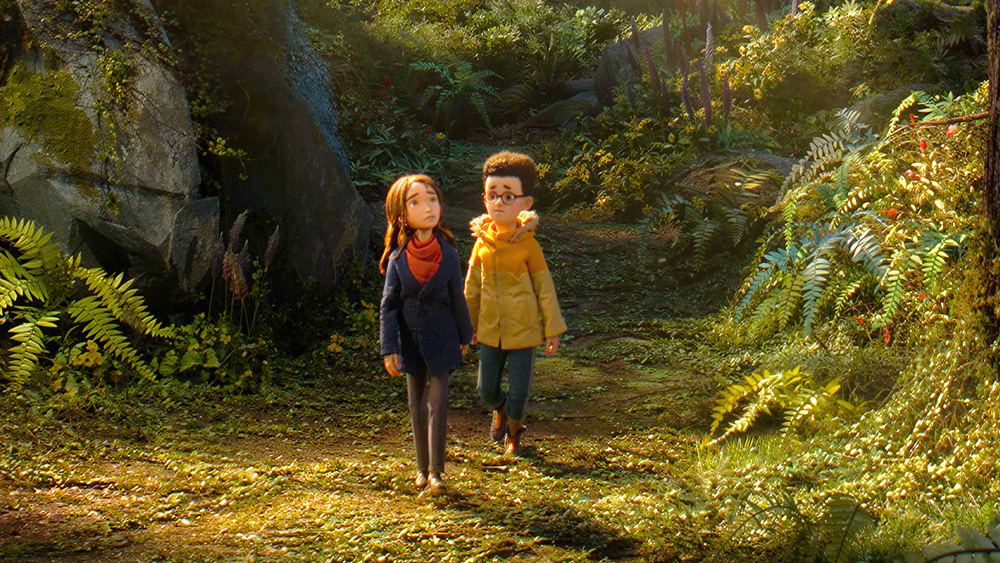
Since their first film Coraline in 2009, LAIKA Animation has went above and beyond to deliver the most ground-breaking stop-motion animation techniques the world has ever witnessed, pushing the boundaries of what even feels accomplishable. By the time 2016’s Kubo and the Two Strings was released, it felt like there was no ceiling left to break through, earning an incredibly rare Best Visual Effects nomination for an animated film at the Academy Awards. With the fantasy epic Wildwood, based on the novel by The Decemberists’ Colin Meloy, director Travis Knight and company have done the impossible. From massive-scale battle sequences with hundreds of on-set characters, to high-octane chases, to the tiniest muscle movements of a grief-stricken face, it is easy to forget what you are watching is the work of one-frame-at-a-time model adjustments and not simple computer animation. But do not take it for granted.
The story, a cross between the woodland realm baby-theft of Labyrinth and the dueling species conflict narratives of J.R.R. Tolkien and C.S. Lewis, Wildwood follows Prue McKneel (Peyton Elizabeth Lee) and her dorky-boy classmate Curtis Mehlberg (Jacob Tremblay) as they enter the magical world of Wildwood on the outskirts of Portland in search of Prue’s kidnapped baby brother Mac by the dowager governess Alexandra (Carey Mulligan). Still mourning the terrible loss of her son, Alexandra seeks to sacrifice Mac through ritual to gain control of the world that took her child from her. Immediately separated from one another, Curtis winds up in the company of Alexandra’s wolf army and befriending a group of imprisoned bandits (the leader Brendan, played by Mahershala Ali). Meanwhile, Prue gains assistance by the giant flying hawk The General (Angela Bassett), the once Prince of Avian Pricipality Owl Rex (Richard E. Grant), and the forest mystic Iphigenia (Tantoo Cardinal) in a desperate race-against-time to save her sibling.
Wildwood is chock full of characters and carries with it the pace and maturity of any live action film to ground itself. It’s handful of humorous lines never overwhelm the seriousness of the story, nor does the seriousness of the story bog down the excitement that occurs from scene to scene. At 131 minutes, a brag-worthy runtime for any animated film, the length never bogs down the breathtaking flow of each thrilling moment. With its bold PG-13 rating, the film also almost never panders to a young audience, unafraid to be brutal and bloody and at times, startlingly mature in content. But as we must always declare: animation is not only for kids. It is both a gift and a curse how well Wildwood balances its tone and showcases its convincingly-life-like animation. How badly your eye wants to appreciate the work that is done so extraordinarily well, the accomplishment becomes invisible behind its thankfully still compelling story. But extraordinary work is extraordinary work nonetheless and Wildwood may very well be the most impressive stop-motion film ever made.
Thanks for reading!





Leave a Reply