
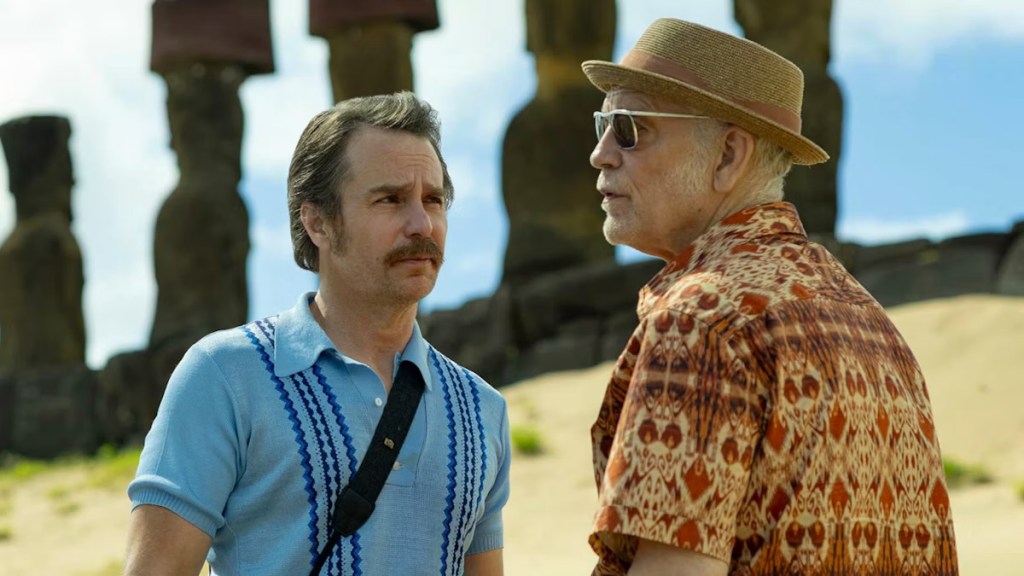
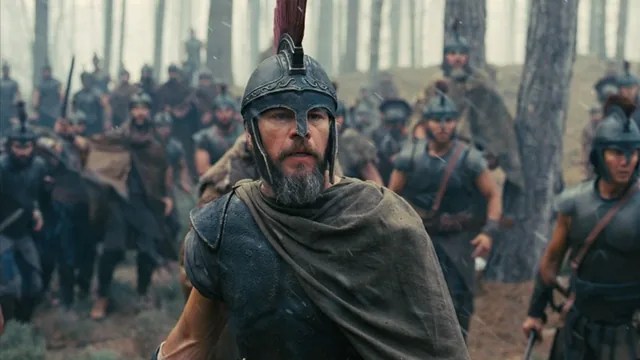
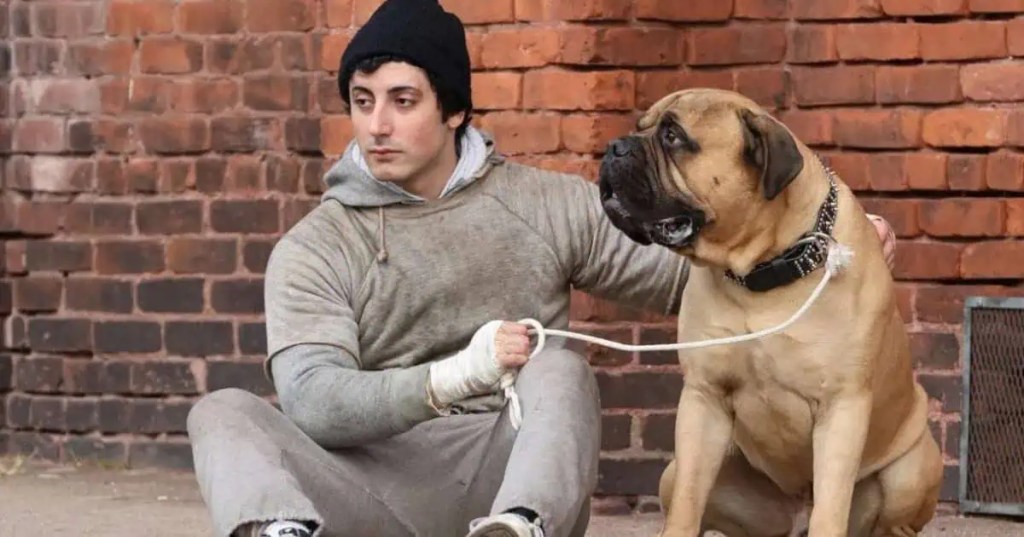
The Twin Cities Film Festival, celebrating its 17th year, is a more-than-pleasant gathering of film journalists and local film fans to experience the joy of cinema, bouncing from the Marcus West End Cinema to the Edina Mann theater screens. Featuring both highly-anticipated studio titles (their People’s Choice Award winner last year going to Opening Night selection, Oscar-winner Hamnet), documentaries and narrative independent films from around the globe, the festival is also a chance to view and appreciate Minnesota’s own local talent, rising Midwest talent, and here-in-the-state undiscovered gems. This year’s opening night is another big one: Searchlight’s awards hopeful Wild Horse Nine from Martin McDonaugh starring John Malkovich and Sam Rockwell. Titles such as La Bola Negra, I Play Rocky, and Elsinore round out a few of the flashier Spotlight films selected in this year’s lineup, though reviews for those mentioned will be posted at a later time, closer to their release. Reviews for Josephine and Run Amok, viewed during the 2026 Sundance Film Festival, can be read here. My schedule will mostly cover those featured in the first weekend, with various smaller titles playing through the rest of the festival viewed thankfully through their online accessibility. My thoughts on these films are as follows, alphabetically:
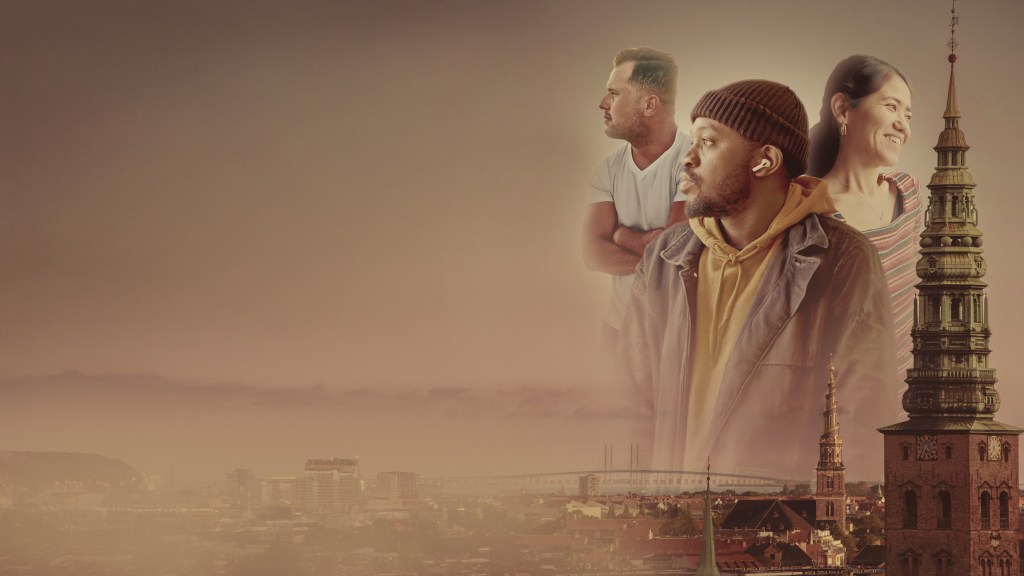
Another Place (dir. Jhizet Panosian)
Iranian child refugee turned adult filmmaker Jhizet Panosian documents the immigrations of three refugees she met while in the European Union. One: a Congolese man living in Belgium named Louines, a Syrian living in Denmark named Hamed, and an Afghan woman living in Germany named Zahra. The story covers their childhoods, their survival in escaping their homeland, and the assimilation to their new surroundings. Panosian includes her own refugee story to meet herself at her subject’s levels, even briefly seen on camera having discussions of cultural separation and homesickness.
These four stories together are engaging and enlightening, even if it all feels too brief. At only 77 minutes, each person only gets between 20-25 minutes to tell their stories, which can’t help but feel limiting. But these subjects exude enough warmth and empathy to hold your attention, eliciting tears both happy and sad. Not all of the subjects have the same pleasant ending to their story, leading to one particularly bittersweet conclusion. Could it have worked better as four documentary shorts? Perhaps, but still worth your attention.
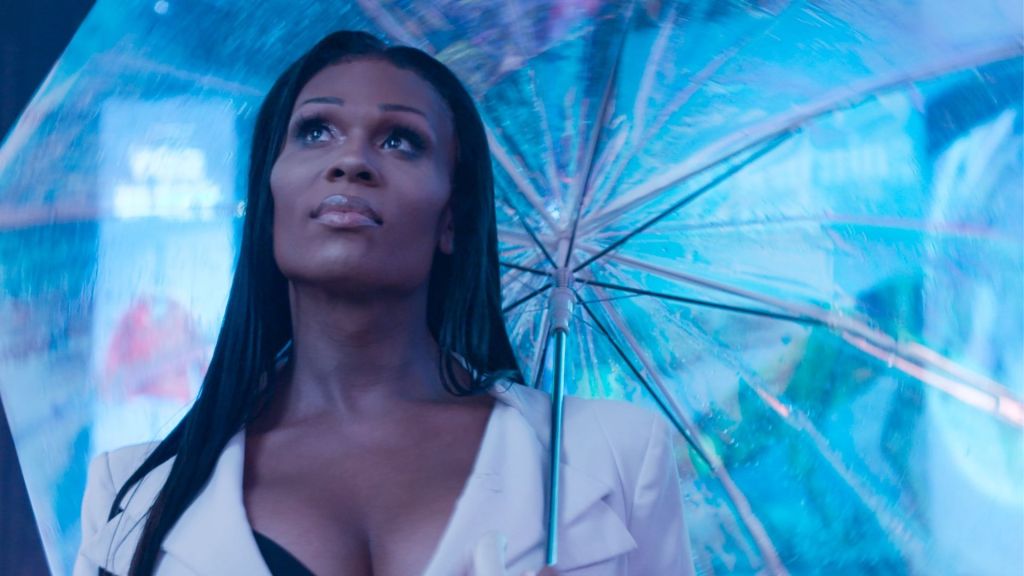
A Deeper Love: The Story of Miss Peppermint (dir. Oriel Pe’er)
Beginning with a simplistic voice-over such as (to paraphrase) “I always knew I was different”, this peak at the rise of Miss Peppermint, RuPaul’s Drag Race’s first ever transgender contestant and near-winner starts on an oversimplified note. But once we are immediately whisked to her New York apartment, attempting a small egg breakfast in 2016, the comfort of intimate time with her does become immediately inviting. From there, we explore her hardship of getting on the popular VH1 reality show, her night-after-night drag gigs, preparations for breast surgery, and hangout gatherings with a handful of her closest trans friends (including recognizable faces of television, Laverne Cox and MJ Rodriguez).
From there, A Deeper Love is a cozily enjoyable and uplifting look at her career and social life, but nothing “deeper”. The story mostly covers the years 2016 through 2020, the latter year hanging ominously in the background, being immediately apparent as we get closer to it that her trajectory will come to a definite pause. But for a documentary that began filming over 10 years ago, its insistence to close her story and reduce the rest to a closing montage kneecaps so much access we wish we could be granted. With a narrow tunnel into her life, only interested in her pursuit to be on the famous reality program, whose existence nearly halted the progression of her career to begin with, much is left out for a more trimmed experience of Peppermint’s world than we would prefer. Moments with her supportive mother are slimmed down to a couple chats over the phone and her outside relationships are noticeably left out or extremely abridged. By the time the credits roll, you will not have regretted your time with Miss Peppermint, but you may feel robbed that there was not more to share.
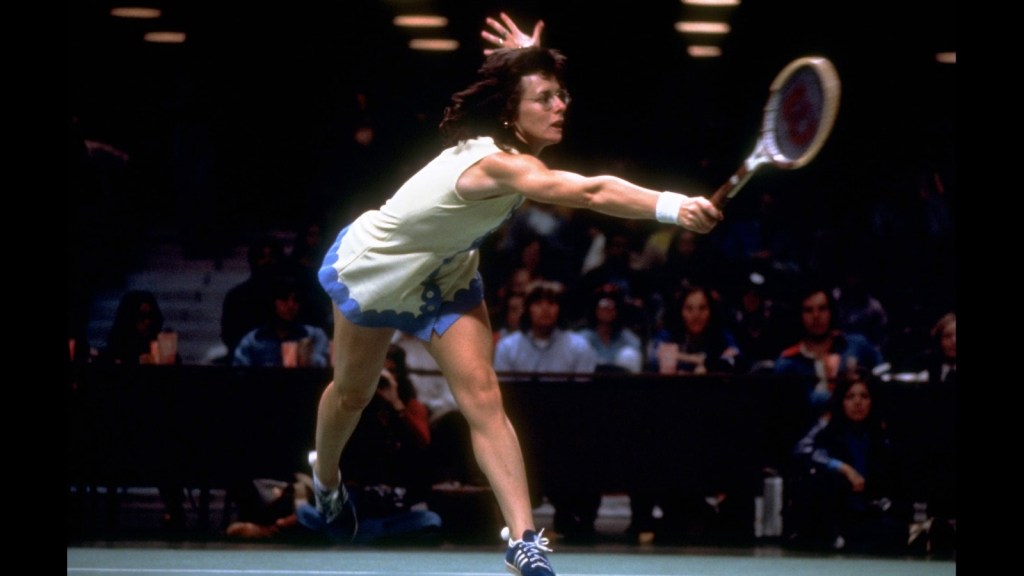
Give Me The Ball! (dir. Liz Garbus & Elizabeth Wolff)
ESPN’s newest 30 For 30 documentary by filmmakers Liz Garbus and Elizabeth Wolff tells the story of female tennis legend Billie Jean King from her own humorous, spunky, and passionate point of view. The now-82 year old speaks straight to camera, leaving out few details of her enormous career that helped change the sport of tennis, particularly in earning the honor of being the world’s number one player and catapulting women’s rights and equality in sports in general.
It’s impossible to deny King of her immense talent and the effervescent personality that came with it and seeing it unfold through incredible archival footage and honest interviews with the important people of her life, including her ex-husband Larry King (no, not that Larry King), fellow players like Rosie Casals and Julie Hellman, and long-time friend Elton John is as insightful and amusing as it should be. While her self-discovery as a queer woman and challenges between her personal life and her consuming sports career are well-covered, the documentary still keeps things light, sometimes coming off as a standard celebrity-doc puff piece, complete with a few on-the-nose music cues (“Just a Girl”? Really?) Perfectly at home with prior ESPN documentaries and will certainly cause reappreciation for one of our greatest American icons.
Hurricanna (dir. Francesca Gregorini)
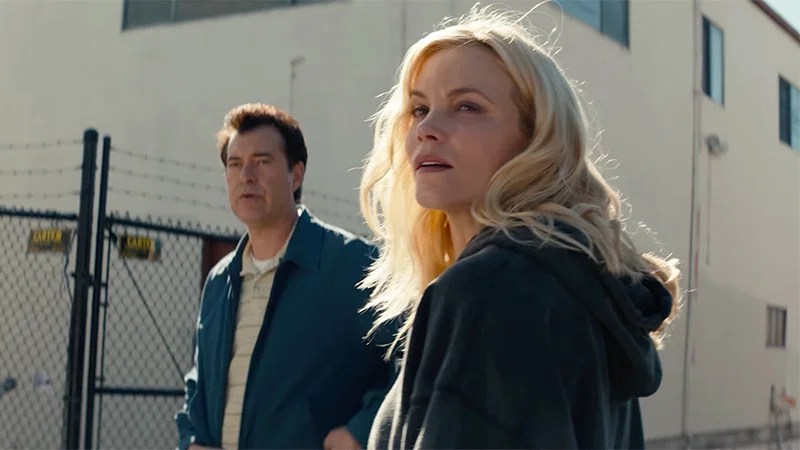
Francesca Gregorini’s newest attempt at a movie ends with the postscript stating “this is a work of fiction”, which if you hadn’t figured that out twenty minutes in, that text will leave you out-loud muttering “yeah, no shit!” Maybe the worst film to screen at this year’s festival, maybe of many years, the telling of Anna Nicole Smith’s death from the perspective of her therapist should scare you away from the premise alone. Truly though, it’s not just the exploitative way it chooses to use Smith’s tragic passing as miserable entertainment, it’s the baffling storytelling and filmmaking choices along the way that morph this abrasive melodrama into an unintentional comedy riot.
Holly Hunter, totally adrift trying to sell some level of sympathy for this insane character, plays therapist Khristine, doing everything she can to monitor Smith’s pill intake and general behavior that is consistently enabled by her irresponsible husband Howard K. Stern (no, not that Howard Stern) played by Mark Duplass. Smith is played by Blade Runner 2049’s Sylvia Hoeks, who does her best to mimic Smith’s buttery whisper, but ultimately is tasked with groveling and wailing for most of her screen time. Her son Daniel, seen in flashbacks and hallucinations played by It’s Nicholas Hamilton, is mostly mute and often spared from having to take part in much of the film’s disastrous runtime.
Hurricanna starts fairly average and unremarkable, constantly feeling a bit icky in its willingness to zoom so far into Smith’s demons without any level of respect for her as a human being. Once Khristine begins to take desperate measures on behalf of her client, it leads her down an absurd journey that involves bribery, a bloody trip to the dentist, getting on-camera socked in the face twice, while the film itself descends into a bizarre fever dream with cartoonish appearances by celebrities, and even worse, a soundtrack choice during the film’s big emotional climax so insane you’ll be coughing a lung out from laughter. It’s one of the most bafflingly bad films of the year by far and an insult to Anna Nicole Smith’s memory.
Jersey Boy (dir. Jaskaran Singh)
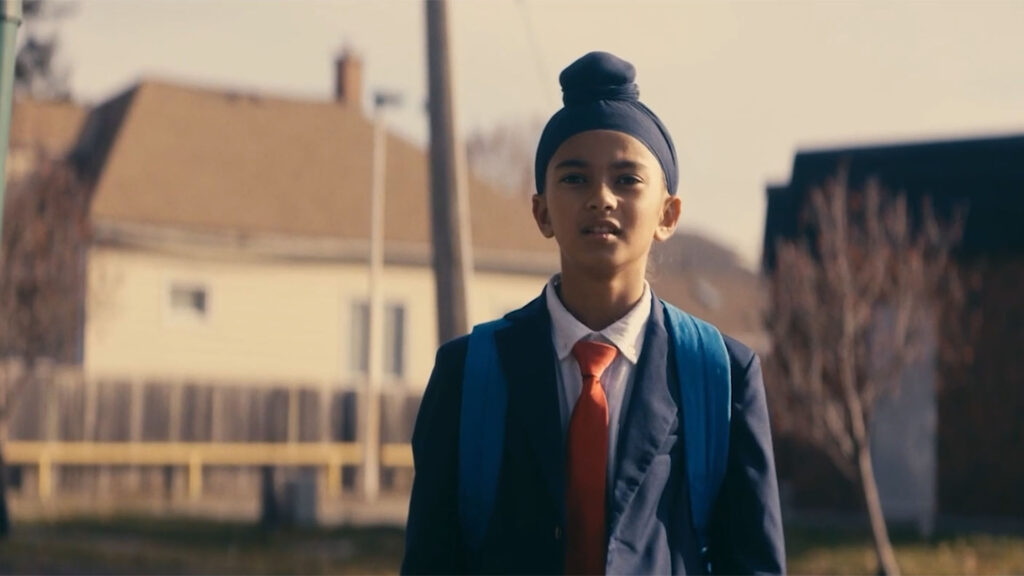
Canadian filmmaker Jaskaran Singh debuts his first narrative feature film, telling the story of Karandeep Singh, KD for short, in a years-long-spanning personal journey of his own cultural acceptance as a Sikh youth-turned-man growing up in New Jersey after a horrible family tragedy. Set in the aftermath of 9/11, KD is your average kid trying to find belonging in a world with increased prejudice and alarm over those whose mere cultural identity is tied with wearing turbans and veils. Bullied for his long, braided hair, KD finds solace in befriending (and gaining romantic interest) in an American girl in his class named Harriet. His parents, who own and operate a local gas station, have raised KD no different than any Sikh child, with the importance and pride of their tradition. But a life-changing act of violence, witnessed by KD at childhood (played by Rayaan Singh Saani) sends him down a years-long complicated path of cultural disconnection and torn family ties.
Equal parts Moonlight and The Place Beyond the Pines in structure and theme, Jersey Boy’s storytelling is familiar but introspective. We’ve seen the child of immigrants balancing Western social life and family expectations story many times before, but its family dynamics nevertheless remain emotionally compelling. KD is a likable presence, an often-awkward dork whose education comes easy to him. But as his past comes back around to him as a teenager (played by Surjun Lail), his allegiance to his family begins to strain. By the time he’s an adult (played by Praneet Akilla), he’s barely the same boy he once was.
Jersey Boy has a story open-hearted enough to keep viewers engaged, though with its generational structure condensed to 106 minutes, much of its dramatic turns feel undercut with unexplored simplicity, skimming through KD’s journey like bullet points. The film’s earnest intentions lack a level of nuance required for a complicated story such as this, reducing its main points to blunt statements and obvious character beats. It doesn’t help that the best performance of the three halves of KD belongs to the youngest, Saani, with the casting of his older selves looking and feeling like completely different characters. Likely the matter of a small production and possible in its intentions to depict KD in separate phases of his life, but ultimately distracting as a whole. Singh’s efficient eye behind the lens with cinematographer Allen Liu do ignite some promise that with a more refined story, a stronger film is on the horizon.
Kids Like Me (dir. Cynthia Loren & Jon Cohrs)
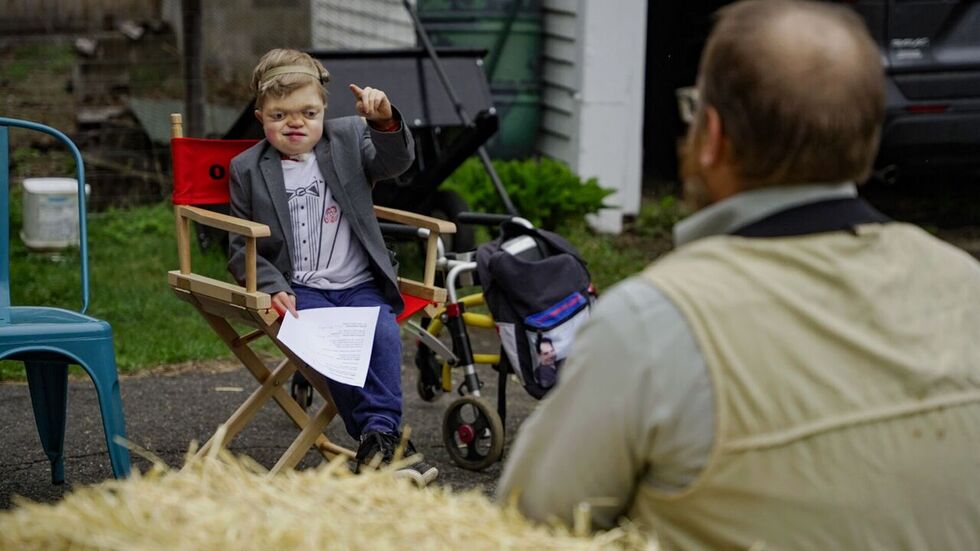
Intimate subject-focused documentaries like Kids Like Me whose primary protagonist is an inspiring child are borderline critique-proof but also a sigh of relief amongst so many heavy-topic films in a year. Yes, Cynthia Lowen and Jon Cohrs’ film hinges entirely on its audience’s all-too-likely willingness to shed all pessimism and allow Oliver Odwazny-Beebe’s life story and delightfully dark fanaticism to wrap itself around their hearts. But every now and then, we all need a little inspiration. With some of the same DNA as 2020’s Dick Johnson is Dead, Kids Like Me doesn’t ignore the tougher aspects of Oliver’s condition, but navigates it through a willingness to laugh and a drive to get creative.
Oliver, who opens the film directing himself being killed on camera, is a murder mystery-obsessive who, while living with Pfeiffer Syndrome, aspires to create his own mystery film. With the help of his parents and community (as well as a surprise guest appearance by a famous TV detective), Oliver’s vision is able to come to life. Capturing his frustrations and mistakes alongside his sweet optimism allows the young preteen to be seen as a true artist with a vision more than just a kid with a limiting disability. It can come off a little cloying for those with hearts of stone, but films like this are chicken noodle soup on a sick day, maintaining an inspirational attitude that gives audiences a 90 minute break from the world and allow some level of hope in humanity.
Not Dead Yet (dir. Erik Weber & Nick Weber)
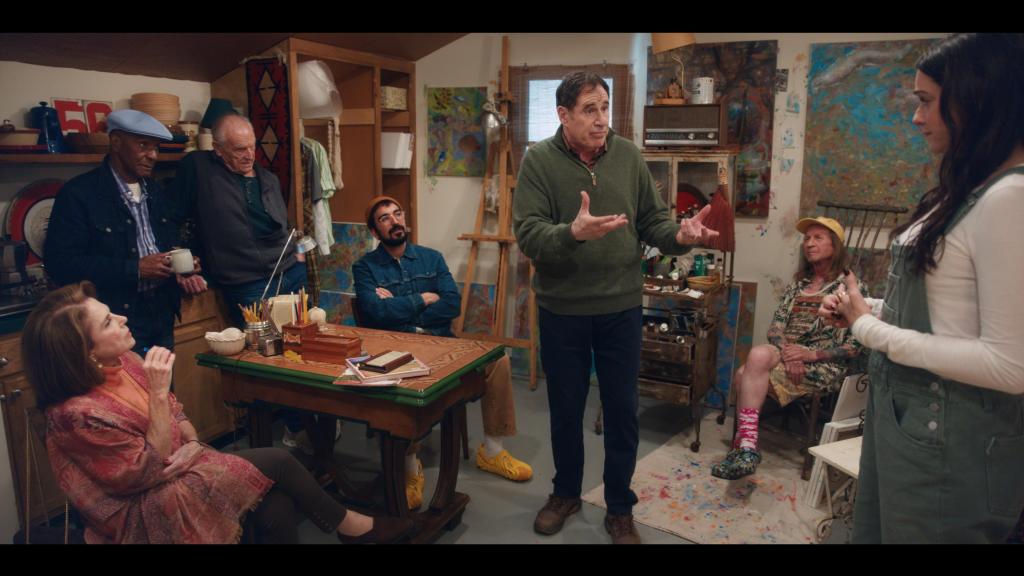
Richard Kind is one of America’s national treasures and a constant joy onscreen any time he pops up. A thespian with an immaculately-recognizable friendly voice and the ability to play old grumps, loud chatterboxes, and sad-sacks, Kind has both on stage and screen crafted hilarious and memorable character actor work from the Coens’ A Serious Man to his exceptional voice-over work in Inside Out. It has been long overdue to see Kind take on a massive lead role, and to be aided by Academy Award nominee Paul Raci and fellow actors Tovah Feldshuh, Polly Draper, Bill Smitrovich, Toby Huss, and radio personality Ed German, granted the feeling that this would be a delightful comedy about the struggle of aging in a world that is increasingly moving on from traditions of the past. That is the intent, at least. Unfortunately, the film lets down its exceptional group of talent with sloppy execution and a lack of any real laughs whatsoever.
Former New York creative director and ad man, Elliot Kellman (Kind) is suddenly thrust into a life of aimlessness when he gets let go from his position due to the limitations of his age. Retreating to the Hamptons with his wife Gina (Draper), he finds himself in the company of a Senior Breakfast Club, all people of a certain age holding on to their talents in an unforgiving world despite an increased lack of success. With the sudden help of an aspiring young sales couple and his new friends, Elliot intends to launch a new ads campaign targeted at people of his own age.
When the film lets the cast just sit at a table and act, it’s not hard to sink into its communal pleasures, but while father-son directing duo Erik and Nick Weber don’t necessarily lack experience behind the camera, it seems they lack the attention to detail. Actors rarely feel like they’re in the proper frame, simple camera setups undermine comic timing, and its performers feel under-directed, having to noticeably mime around their surroundings with their final takes feeling like the first take. Poor Richard Kind is in charge of making pancakes in one sequence, and as his son comes around the corner to take over for him, there doesn’t even appear to be anything in the frying pan. Scene after scene feels as aimless as its characters despite its clear heartfelt center.
One in a Million (dir. Itab Azzam & Jack Macinnes)
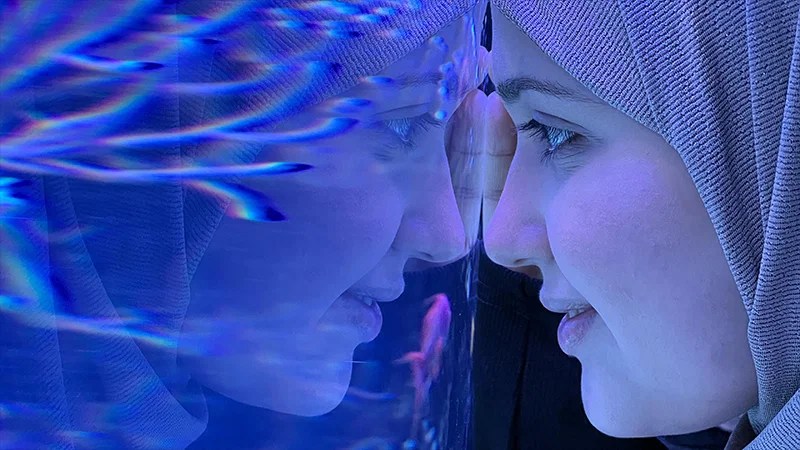
Familial bonds and devotion to holding onto tradition prove to be an unbelievably tough balance as young Isra’a and her family escape Syria as refugees in Germany. There, they gain a bountiful amount of freedom that eventually proves deeply uncomfortable for one of her parents. As Isra’a, her father Takem, her mother Nisreen, and her siblings attempt to assimilate to this new life, the strong-held beliefs and homesickness for Syria cause life-changing decisions over a documented 10 years of her life from the age of 10 to 20.
Itab Azzam and Jack Macinnes’ film, which won the World Cinema Documentary Prize at Sundance, begins as an intense and inspiring family story and morphs into something far more complex and challenging. As Isra’a’s family begins to divide, many of her own beliefs begin to change as well on her journey from child to womanhood. One in a Million is equal parts harrowing and beautiful, ending with an admission of guilt that will leave you breathless.
Small Talk (dir. Steven Gerald Warkel)
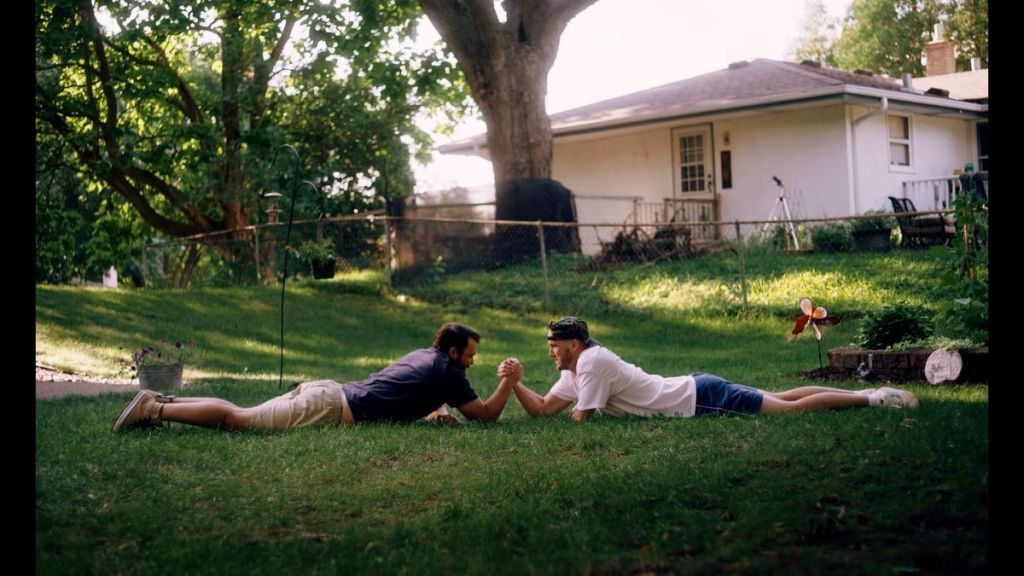
Millennial depression is no joke in Steven Gerald Warkel’s second feature Small Talk, based on his student thesis short film of the same name. While his first film, the pastiche-thriller Hair-Trigger in 2022, was a junky but fun and bloody exercise, Warkel’s next could not be more different. In what feels like a response to a generation of young people lost in a post-pandemic world whose economy doesn’t support them and whose social skills were warped by the internet, Small Talk is a highly relatable window into the soul of the unambitious, coddled by the reliance of nostalgia.
The film stars Nicholas Chas Biewer as Travis, a young man whose high school and college social circles have all progressed without him. His mother is terminally ill, though Travis’ infantile inability to cope has caused him to fully ignore the situation, distracting himself with reigniting failed relationships, drowning himself in alcohol, and unable to have one important talk before finding an excuse to exit the conversation. The problem with Travis is what makes him likable: he’s constantly a good hang and a highly approachable personality, always in seemingly good spirits and willing to pretend the world stops for him whenever he pleases. Biewer’s performance feels effortless, extremely well-cast as the golden retriever protagonist, whose life probably would make more sense to him if he were just a dog.
At only 70 minutes long, the film’s runtime is perhaps too breezy, rolling credits before we feel like we’ve spent enough time with Travis balancing his mental health with his new job or trying to rekindling other past friendships and relationships. Despite its brevity, as the Ferris Bueller saying goes, “life moves pretty fast”, and regardless, what we are left with is incredibly impressive, beautifully performed work. Those that have (mostly) gotten a grip on adulthood may find Travis to be sympathetic enough, but the Travises (Travii?) of the world, and I know all too many as the numbers grow each and every year, will likely find real profound attachment to him within the first few minutes.

A Talent For Murder (dir. Anton Corbijn)
Helen Mirren is a frumpy, sneering hoot as famed author Patricia Highsmith in Anton Corbijn’s extremely fictional tale of the writer’s process. Visited in her Switzerland home by nebbish literary agent Edward Ridgeway (Alden Ehrenreich), Highsmith initially refuses the man’s desperate request to get her to finish her sixth Tom Ripley novel, but he persists. From there, Highsmith challenges Ridgeway to inhabit the mind of a killer and help finish the book alongside her with the plot hinging on the seduction on an heiress (Olivia Cooke) and the murder of her wealthy family.
Corbijn gets to embrace a sillier side than we’re used to, working off of Joanna Murray-Smith’s adaptation of her play Switzerland. While its story within a story doesn’t come close to the luxuriously sinister Talent Mr. Ripley, the film does acknowledge that Highsmith’s best work is long behind her. Instead what we’re given is an enjoyable-enough thriller with two actors having a blast sparring words and picking brains. Ehrenreich is a fairly impressive Ripley substitute, able to flip-flop between believably milquetoast to charmingly suave. Mirren gets to chew scenery and spat insults under a mid-Atlantic accent. It never quite lives up to Highsmith’s name as a story, but it is a mildly clever exercise.
Wild Horse Nine (dir. Martin McDonaugh)
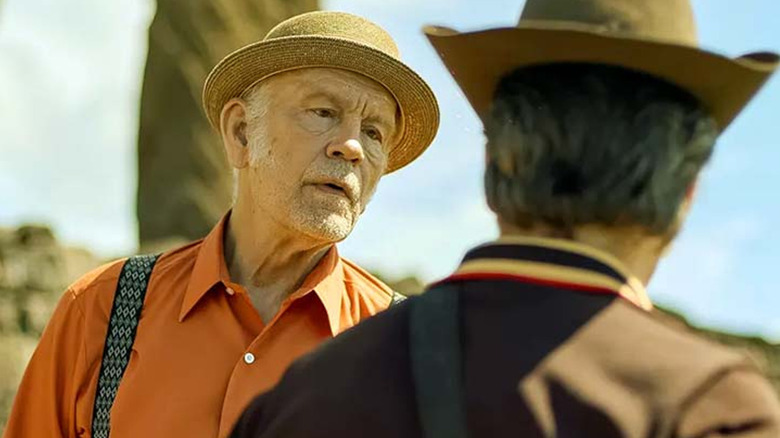
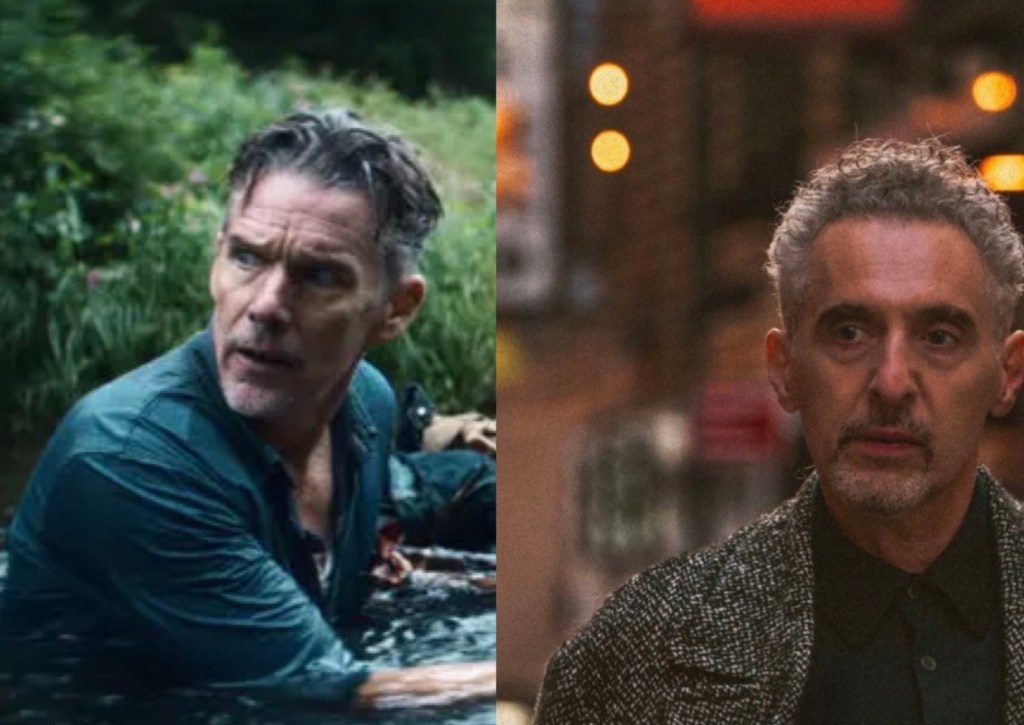
Martin McDonaugh’s latest film about two CIA operatives stationed on Easter Island before the 1973 Chilean coup d’état is another blissfully pitch-black comedy with two outstanding lead performances. Cut from the same cloth as In Bruges, McDonaugh’s magic sauce works best with a well-chosen, bickering pair and John Malkovich sinks into the blunt vulgarity with the visual ease of a figure skater. His gruff mumbling, lazy eye and wandering gaze spouting out CIA secrets to strangers and rambling nonsensical musings of the world is often hilarious but the calmness he provides the character also emphasizes the deep level of regret. Knowing his last days on Earth are approaching, dealing with both cancer and rapid memory loss, he knows he will be judged by his experiences manipulating the greater world and taking lives. His encounters with young college tourist Monica (Mariana di Girolamo) ride a beautiful line between sweet and unforgivingly honest.
Sam Rockwell, a McDonaugh natural (and Oscar winner for Three Billboards Outside Ebbing, Missouri) feels absolutely in his comfort zone. Rockwell, who has equal screentime to Malkovich, is dynamite here being fearlessly brash in chewing out CIA chief MJ (the always amusing Steve Buscemi), stupendously bothered by calls from his wife Marge (Parker Posey), and riddled with immense pressure to perform a task he does not want to do. Having Rockwell as your co-lead also carries with it a pleasurable release of comedy underneath the tenderness, and his dead-pan stunned reactions to Malkovich’s fever dream brainstorming is a sight to behold.
Where Wild Horse Nine may fall short of some greater expectations is a sense of recycling from McDonaugh himself, who has played in this same general storytelling wheelhouse already. This is very much “what if In Bruges but set in a different location”, complete with Buscemi, di Girolamo, and Malkovich as the Ralph Fiennes, Clémense Poésy, and Colin Farrell surrogates. It also does take a while for the film to really land a perfect groove, but when McDonaugh allows the melancholy to really take over the story, its heart is much more exposed, leading to an Old West-inspired finale that feels refreshingly bittersweet. As someone who believes his prior film The Banshees of Inisherin is a stone-cold masterpiece, Wild Horse Nine never totally sunk its claws into me the same way, but still sticks the landing as another solid gem in his catalogue.
The Twin Cities Film Festival was held on October 15-October 24th, 2026. Thank you for reading and be sure to seek out these films when they become available to you!



Leave a Reply