
There’s a moment in Nathan Fielder and Lance Oppenheim’s documentary where Fielder uses a classic Abbott and Costello bit to analyze infamous businesswoman and convict Elizabeth Holmes’ reaction. The punchline is understandable to anyone with a clear mind, but while the exaggerated performance of the act makes her grin, she can’t seem to understand the purpose of the joke. Fielder proposes that it’s possible that her mind just processes information differently, to which her potentially sociopathic partner Billy Evans responds in agreement, infantilizing her. The camera, as it does throughout most of the lengthy documentary, sits in a tight closeup on Holmes’ enormous eyes in sympathy. It’s hard not to feel sympathy in the moment for someone who clearly has an inability to understand basic communication. And then, as Fielder had to as well, we have to remind ourselves that this is Elizabeth Holmes, a woman who made a career off of lying.
Spending 34 days with Holmes, per her request to film her daily life, Fielder is tasked with being both the fly on the wall of her family’s life and the comforting presence that allows her to talk openly on camera. Holmes, preparing for her prison sentencing for wire fraud and founding Theronos, which launched a scam machine that falsely tested “accurate” blood test results, finds true friendship in Fielder, whether or not Fielder is truly reciprocating it back. Fielder asks her extremely challenging questions, most of which she responds with “I don’t know” or “I don’t remember”, but throughout his time with her, she intends that he still see and ask everything.
Her father at one point addresses a pivotal traumatic moment in her life as the source of her behavior, and while it causes us to put one more penny in the sympathy jar, why Holmes would choose Nathan Fielder to document her life is a question onto itself. Fielder, whose signature awkward style of humor is built on satire and deception, obviously would never bend the knee to whatever manipulated version of herself and her history she intended to portray. Why does she want to be seen as “incapable”? Fielder gets so much unique material out of Holmes, you must assume she’s writing it all in her head the night before. Or maybe it is her authentic self? But even stranger is the other person living in her house.
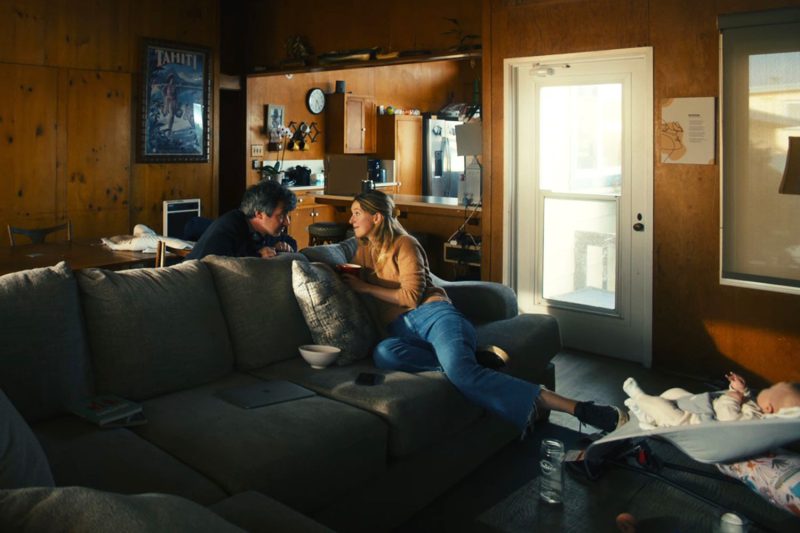
Billy, Elizabeth’s partner and father to her two children, is often portrayed as a bug-eyed psychopath more than a loving, supportive husband. Throughout the film, Fielder and Oppenheim give plenty of camera time to Billy, who exposes himself (inside and out) to be a controlling narcissist, but is he the manipulator, the manipulatee, or the co-manipulator? His initial meet-cute with Holmes began with an encounter at a party in which Holmes effectively kept eye contact with him throughout a lengthy conversation. Evans was aware of Holmes’ troubling history and yet pursued her anyway. Is she playing his game or has he been playing her game all along? Did they invent the game together? Is there a game at all?
Evans becomes the true villain of the piece minutes into being introduced to him. Unable to let Holmes whisk an egg without taking it from her and doing it himself “the right way”, red flags abound. The source of stability in her collapsing life, Holmes has no judgements or critiques for her partner, and often allows him to explain the way her brain works to her and to Fielder. In one instance, Billy tries to use this tactic on Fielder himself, to which Fielder calls him out on camera.
Outside of her fiercely-rocked baby and the criminal justice system, Fielder is clearly the only trustworthy and honest character in the film. Going through his own personal life events (as well as training for a monumental task that was documented in his HBO series The Rehearsal), Fielder somehow still dedicated months to years of his life being by Holmes’ and her family’s side and consistently having to push back against Evans’ cold-feet requests for the film. It is incredible how much thorough brain-picking and open-conversation remains so thrilling before we even reach the halfway point of this 170-minute dissection. Even more thrilling is that the first half of the film doesn’t even crack the surface of everything that happens after Holmes is brought behind bars. While many of the film’s secrets have already been leaked and discussed, including the very pivotal presence of a famous face and the further descent into startling unease with Billy, seeing these events unfold in context becomes almost breathless.
On top of that, once Fielder loses literal contact with Holmes, he attempts through filmed recreations of his own memory to fill in certain important gaps that occurred pre and post his initial time spent with her. While he leaves no literal proof of certain conversations had, after spending so much intimate time with him, Elizabeth, and Billy, Nathan is the only person we can possibly trust to be telling the truth, even if it has to be portrayed by performance. You Can See Everything places us in tense conversations, shocking reveals, and riveting mind games that you truly do feel like you’ve seen everything. But that doesn’t mean we understand anything.
Leaving the theater will leave most moviegoers more perplexed than when they walked in. Oppenheim’s stunning shooting style manages to capture every literal angle of their life, being as literally close as one camera can get to a human being. Adam Locke-Norton’s monumental editing work and propulsive score by Ari Balouzian keep your heart racing as you crave the next nugget of information. Fielder and Oppenheim have created one of the most fascinating documentaries released in modern memory, one that forces your attention and makes you examine everything. An enthralling three-hour opus that questions its own sanity as much as its subjects’ as it meticulously pieces its bizarrely-shaped puzzle pieces together.







Leave a Reply