

In 1986’s delirious sequel The Texas Chainsaw Massacre 2, Leatherface is given an ultimatum: sex or the saw. In the context of the situation, Leatherface is forced by his family to choose between taking part in a sexual situation with his victim for which he is dramatically unfamiliar or to wield his weapon and be a killer. In the end, he chooses the saw. Much like Leatherface, Hannah Einbinder’s Kris is extremely out-of-touch with sexuality, only knowing her sexual and gender identity, but being too disassociated to truly take part in it. What stimulates her is the movies, the absorption of the cinematic experience. In Jane Schoenbrun’s newest head-trip directorial feature Teenage Sex at Camp Miasma, takes Leatherface’s ultimatum and asks a new question: what if sex IS the saw?
Much like the endless franchise glut that the Texas Chainsaw franchise is associated with, though far more inspired by the Friday the 13th franchise, Camp Miasma (in this universe) is a long-running, fan-favorite slasher series and is in need of yet another reboot. Installed with its own controversial origins that have been debated as transphobic (recalling another film with Camp in the title, perhaps?), the powers that be have entrusted this material onto a queer filmmaker with a fresh perspective, this being Kris Williams. Kris has been tasked with making a version of this IP that appeals to modern audiences and tamper down its problematic story.
Kris has been an obsessive of this franchise, completely unsure why given its quality beyond its immeasurable source of comfort. Her envisioning of the material involves casting the original film’s final girl Billy Presley (Gillian Anderson), a task that involves driving out to the film’s original location of Camp Tivoli in the Pacific Northwest, where Presley has been living. Their fascination and attraction with one another is immediate, including sharing a seductively-shot meal of KFC chicken. But beyond their mutual interest, something mysterious and buried begins to burst through the cracks of both the titular camp’s lake as well as inside Kris herself.
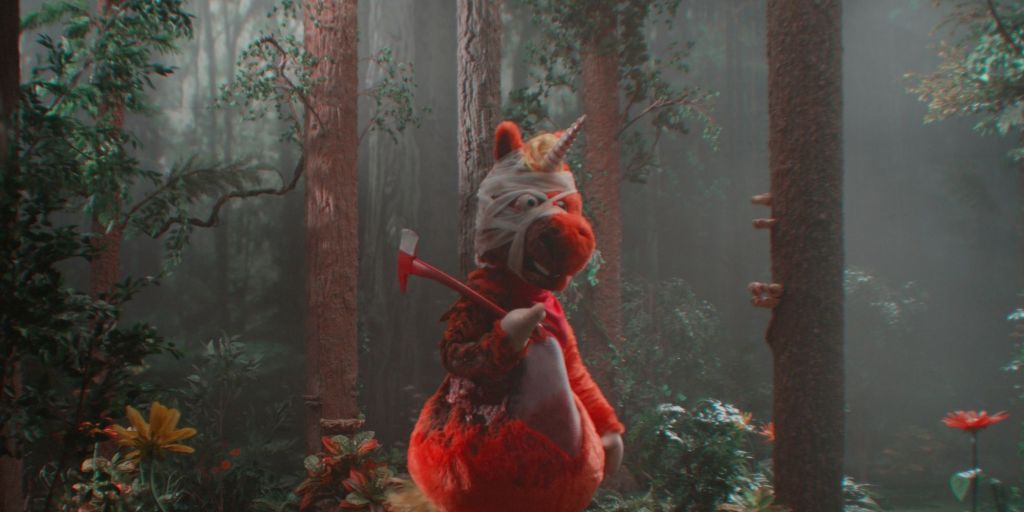
From the jump, the opening credits showcase an attention to detail that is a feast for the eyes of those obsessed with junk food splatter-fests. A loving visual ode to the history and legacy of the many franchises our horror community has committed their hearts to. In sync with Schoenbrun’s previous film, I Saw The TV Glow, film and television form a symbiotic connection to viewers at a vulnerable age, molding and perhaps even explaining who they are and who they will become. There is also the (intensely relatable) and considerable focus on films as an escape, to the point where their existence becomes embedded into our realities. Schoenbrun tackles it all with a stunning visual eye, one that obsessively recreates 1980s and 1990s pastiche, early 2000s DVD menus, and incredible matte painting backdrops that seamlessly blend into its dream-like environment.
But Schoenbrun never over-explains the film’s message, not verbally at least. For all of what it packs in under two hours, they recommend the viewer to not focus on the plot whatsoever and just go with the feeling. Get lost in the saturated reds and cool blues of its frame, the moody score by Alex G, the brilliantly-millennial soundtrack, the sexuality, and most importantly, the escapist flair of seeing fountains of blood burst from the necks of its recognizable supporting cast (almost none of which I want to spoil in this review). Perhaps, there at the bottom of this film’s lake lies the answer all along. A love story between two beings: humans and the entertainment that raised them.



Leave a comment